
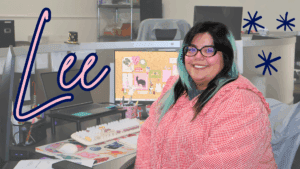
 Meet Maria Garcia, Front Steps’ Case Manager!
Get to know Maria Garcia, or Lee, a case manager at Front Steps whose passion for social work is rooted in compassion, community, and second chances. In this interview, Lee shares her journey into social services, what motivates her on challenging days, and what Front Steps’ mission means to her.
Q&A Interview:
- Can you share a little about yourself and your professional background?
-
My name is Maria Garcia, but I go by Lee. I was born and raised in Hidalgo, Texas. I did my undergrad and graduate work at Texas State University. I have been working in the social work field for about 6 years now and have been working with the unhoused population. I am taking my licensing exam in March and hope to grow professionally to continue to serve.
-
- What drew you to this kind of work, and how did you get started in the field of social services?
-
I was inspired by my grandmother at a young age, watching her be a pillar of the community. She’s the reason I wanted to help. My first social work job was at an emergency children’s shelter during COVID, and I learned so much there from those children. After the shelter, I worked at an organization that provided transitional housing for single mothers who were experiencing homelessness.
-
- What inspired you to join Front Steps and take on your role as a case manager?
-
I want to learn more and apply the skills I have learned throughout my years. I enjoy meeting with clients and problem-solving with them. We can learn a lot about ourselves, too, when we talk and listen to people with all kinds of experience. I enjoy building rapport with clients and trust, and I aim to build on that as a case manager at Front Steps.
-
- How have your personal and professional experiences shaped your approach to supporting individuals experiencing homelessness?
-
During my graduate internship at Sunrise, I got first-hand experience working with the unhoused population. My previous experience was with families, but I was doing case management with people who became homeless that very day. It was a whole different system to learn. That experience showed me how to work with all people with all kinds of backgrounds (immigration, criminal, veterans, etc), but there was always one truth: housing is a human right, and people need that second chance. I believe in helping the person in front of me and showing them compassion and dignity.
-
- Outside of work, what are some hobbies, interests, or activities you enjoy?
-
I love going to Lady Bird Lake on the weekends with some coffee or matcha (if the weather is nice) and walking around and people watching. I also enjoy going to the movies or music shows with my friends.
-
- What motivates you to continue doing this work, even on challenging days?
-
-
I think reflecting. I see my clients who are dealing with hardships and continue to get up and get the work done. It reminds me that anyone is capable of reaching their goals and changing their life; all we need is determination and someone to believe in us. So, even on those challenging days, I keep moving forward because I know my clients believe in me.
-
- Can you share a moment or experience with a client that deeply impacted you or shifted your perspective?
-
-
When I worked at the children’s emergency shelter, it was my first experience being in an environment like that. Most of the children who came in would have behavioral issues either due to abuse or just being separated from their families. I can remember how each of them came in angry, sad, or detached, but I saw firsthand what a healthy routine and a safe environment did for them. How normalcy and someone safe to talk to helped them grow into themselves. On Christmas Eve, the shelter had worked hard to get gifts for all the kids there, and the night staff wanted to surprise them at midnight. So we wheeled in all the gifts,and before we knew it, the whole room was full. We could hear the kids giggling and still waiting in anticipation, and there was a buzz of excitement. Finally, we called them out, saying Santa was here, and the kids came running out. I’ll never forget the feeling of seeing those kids open those gifts, and just for that moment, they got to experience what all children should feel on Christmas.
-
- How do you define success in your role?
-
-
I will say I define success as a change of habits/routines. I think success can be measured in many ways. I know that helping the client be self-sufficient and no longer needing services is a huge marker, but also celebrating the small victories, such as scheduling an appointment and following through. The small changes made can lead to the big goal.
-
- In your own words, what does Front Steps’ mission mean to you?
-
-
I would say that it means helping our community during a difficult time and treating our clients with dignity and respect. Making housing a more accessible path for our community is so important, and all people deserve a safe place to call their own.
-
10 How do you see your role contributing to that mission?
-
-
I can see myself contributing to that mission by showing up for clients, helping them find their own paths, and holding them accountable so that they, too, can become self-sufficient and continue to grow and heal in their own homes.
-
- What do you wish more people understood about the realities of housing instability or homelessness in Austin?
-
-
Helping our unhoused neighbors is helping ourselves. I can recount so many stories from clients on the “How I ended up,” and a lot of people just had one big thing go wrong, like losing a job, becoming sick, injured, and unable to work. We can all benefit from grace and the reminder that we are all still human. And for some of us, we are one thing going wrong from becoming unhoused. Helping our community enables us to create programs and initiatives that support people in maintaining their housing during challenging times.
-
- Is there a particular skill or area of expertise you’re eager to grow in while working here?
-
-
I want to learn as much as I can. I’m ready to learn.
-
- What message or piece of advice would you like to share with our community or the neighbors we serve?
-
-
I just want to share that during difficult times, especially now community is so important. Creating pockets for people to self-improve and have those second chances is always worth the cost. People are worth the effort; you are worth the effort.
-